
Back pain can be frustrating when you are already doing what seems like the right thing: planks, abdominal exercises, and “core strengthening.” Yet the pain may still return when you sit, walk, bend, or move through daily life. The issue is often not a lack of effort. Many core exercises for back pain fail because they train only a small part of the system that supports the spine, use poor pressure control, or overlook the real source of uneven loading in the body.
A useful core routine is not about chasing a stronger six-pack or holding a plank for the longest possible time. It is about helping the muscles around your spine work together to maintain a supported, neutral position while you breathe and move. This distinction can change how you approach core exercises for back pain.
Table of Contents
- Your Core Is More Than Your Abdominal Muscles
- Why Planks Alone Are Not the Answer for Back Pain
- Breathing and Pressure Management Matter in Core Training
- Back Pain May Not Start With a Weak Core
- How to Make Core Exercises for Back Pain More Useful
- The Key Takeaway
Your Core Is More Than Your Abdominal Muscles
One of the biggest misunderstandings around core exercises for back pain is the belief that the core means only the muscles at the front of the stomach. The rectus abdominis, often associated with visible abdominal definition, is part of the picture, but it is not the whole picture.
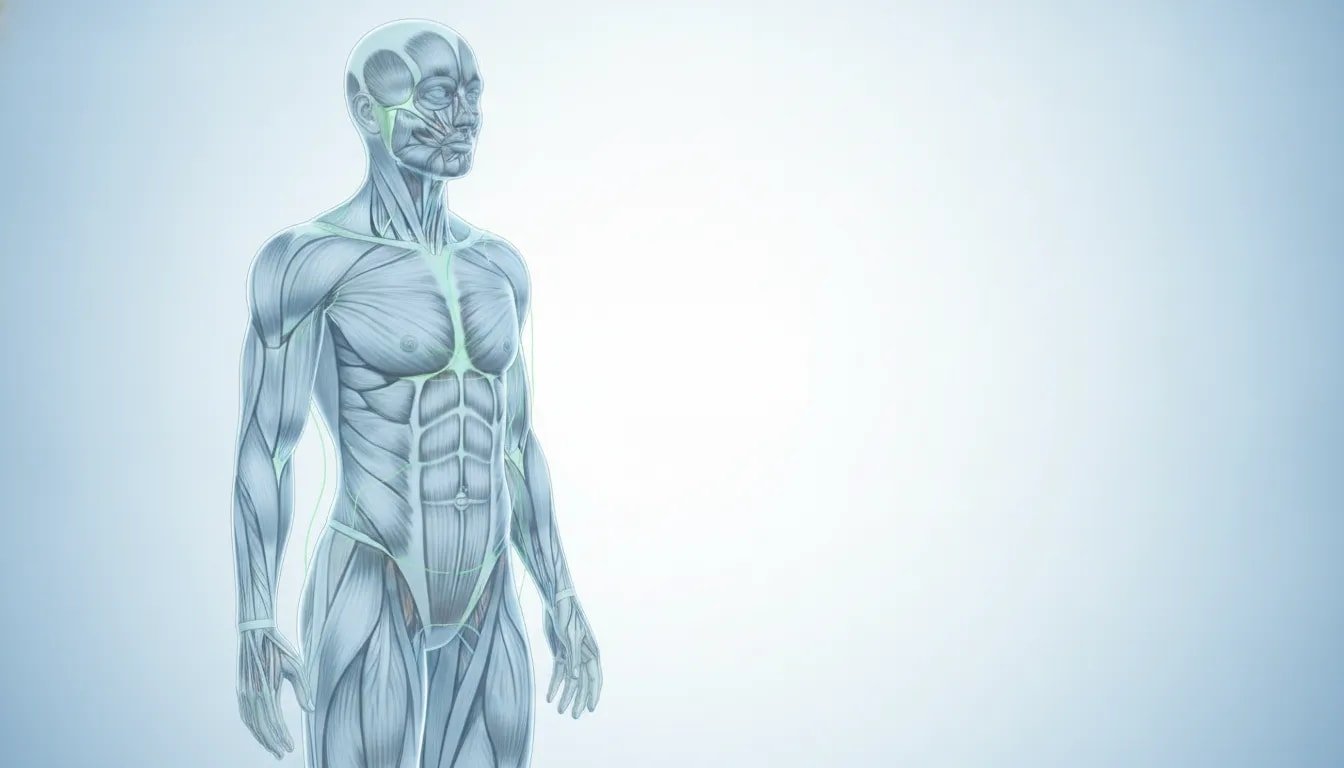
The core is better understood as a group of muscles running from the neck to the hips that help support the spine. These muscles work around the front, sides, and back of the torso. Their role is not simply to create movement or make the abdomen look tighter. They help the spine remain controlled and supported during everyday activities.
Think of spinal support as a 360-degree system. If training focuses only on the front of the body, the system can be incomplete. Stronger front abdominal muscles alone do not automatically mean that your spine is being supported effectively from every direction.
This is why a routine built only around crunches, sit-ups, or long front planks may not produce the change you expect. Those exercises may challenge certain tissues, but they do not automatically teach the entire trunk to coordinate around the spine.
What a more complete core approach looks like
Effective core exercises for back pain should emphasize the ability to maintain spinal support rather than isolate one visible muscle group. The goal is for the front, sides, and back of the trunk to contribute to control.
- Front support: The abdominal wall contributes to trunk control.
- Side support: The muscles along the sides of the torso help manage movement and stability.
- Back support: Muscles behind the spine also contribute to maintaining position.
- Hip connection: The core extends to the hips, which influence how load is managed through the body.
This does not mean every exercise needs to feel difficult or create intense abdominal fatigue. It means the exercise should encourage the trunk to remain organized while the body moves, rather than allowing the spine to lose its supported position.
Why Planks Alone Are Not the Answer for Back Pain

Planks are commonly treated as the ultimate answer for core strength. They can be one tool, but they are not a complete solution. Performing a plank for five or ten minutes with poor posture, poor breathing, or poor pressure management can reinforce an unhelpful strategy instead of building useful support.
Duration is not the same as quality. A shorter exercise performed with a controlled spinal position can be more valuable than a longer hold performed while the body compensates. If the lower back shifts, the ribs flare, breathing becomes strained, or tension is forced into the wrong areas, the exercise is no longer serving its intended purpose.
The same principle applies to all core exercises for back pain. A movement may look correct from the outside while the person is bracing excessively, holding their breath, or losing control of their torso. The important question is not simply, “How long did you hold it?” It is, “Could you maintain spinal support and breathe well throughout it?”
Use neutral spine as the reference point
A neutral spine is a supported middle position, not a rigid posture that is forced or held with maximum tension. During core training, the aim is to keep the spine controlled without collapsing, overextending, or twisting unnecessarily.
Rather than trying to make the lower back completely flat or exaggerate its curve, focus on a position that feels balanced and sustainable. The trunk should feel active, but you should still be able to breathe. When maintaining position requires breath holding or visible strain, the drill may be too demanding for your current control.
Quality checks during an exercise
- Can you keep your trunk supported without obvious shifting or collapsing?
- Can you continue breathing instead of holding your breath?
- Can you avoid forcing all the effort into the front of the abdomen?
- Can you maintain control for the full repetition or hold?
- Does the movement feel like coordinated support rather than a contest of endurance?
If the answer is no, reduce the challenge. That may mean shortening the hold, reducing the range of movement, using a more supported position, or choosing an easier variation. Progression should come after control, not before it.
Breathing and Pressure Management Matter in Core Training
Breathing is not something to ignore until the end of a set. It is part of how the core supports the spine. For core exercises for back pain, 360-degree breathing helps create more balanced pressure and support through the torso.
Instead of directing every breath only into the upper chest or forcing the stomach outward, think about allowing the torso to expand around its full circumference. The front, sides, and back of the ribcage and abdomen can all participate. This creates a more complete pressure management strategy than simply sucking the stomach in or bracing as hard as possible.
Good pressure management supports the spine while allowing breathing to continue. Poor pressure management often shows up as breath holding, excessive gripping, or a loss of body position. These habits can make a core exercise look challenging, but they do not necessarily make it effective.
For a fuller explanation of how breathing patterns can affect trunk support and movement, see this guide to diaphragmatic breathing for chronic pain relief and better movement.
A simple breathing focus for core exercises
Before adding difficulty to an exercise, establish a position where you can breathe comfortably. As you inhale, allow expansion around the trunk rather than lifting only through the chest. As you exhale, maintain a gentle sense of support around the torso without clenching or stopping the breath.
The target is controlled breathing while the spine stays organized. This is especially important during planks and other static holds, where people often tighten excessively and forget to breathe. If you cannot breathe smoothly, treat that as useful feedback that the exercise needs to be adjusted.
Breathing control does not make an exercise easy. It makes the challenge more relevant. A core that can support the spine while breathing and moving is more useful than one that can only create maximum tension for a few seconds.
Back Pain May Not Start With a Weak Core
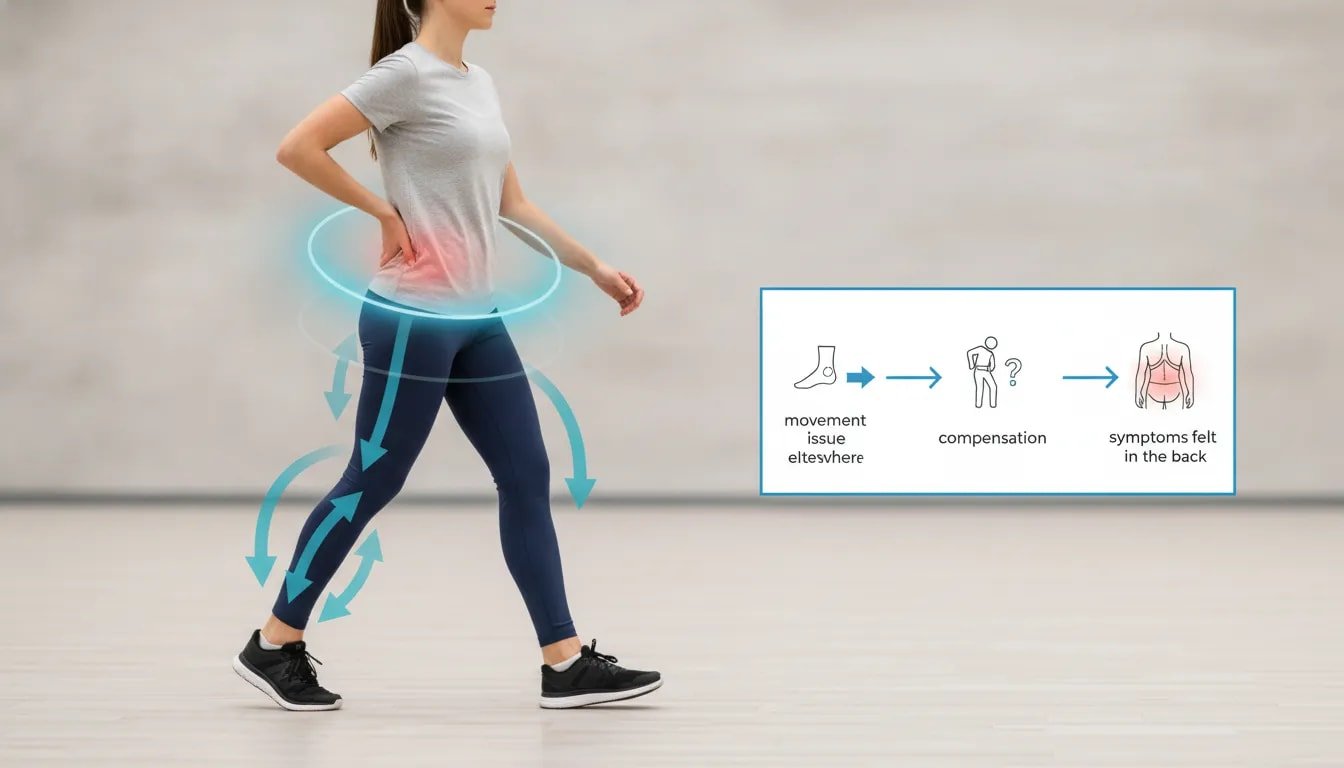
Not every case of back pain is caused by a problem in the back or core itself. Pain or movement limitations elsewhere in the body can change how you carry your weight and how forces are distributed during routine movements. This can alter your center of gravity and place uneven load through the spine.
For example, a joint deviation or movement issue can lead the body to compensate while walking, sitting, or performing other daily tasks. The back may then become the place where symptoms are felt, even if it is not the original driver of the problem.
This is one reason generic core exercises for back pain can feel disappointing. You may be training diligently, but the routine is addressing the symptom location rather than the movement pattern that is contributing to uneven loading.
Look beyond the painful area
When back pain keeps returning, it can be useful to consider how your whole movement system is functioning. Notice whether the discomfort appears during particular activities, whether one side feels different from the other, and whether changes in posture or movement affect symptoms.
A broad movement assessment can help identify whether another joint or movement strategy is changing how load travels through the body. A one-to-one movement assessment is designed to examine the factors that may be driving recurring pain, stiffness, or injury rather than focusing only on the site where discomfort is felt.
This whole-body perspective does not mean the core is unimportant. It means the core needs to be trained in the context of how you actually stand, breathe, walk, sit, and move.
How to Make Core Exercises for Back Pain More Useful
A better approach does not require collecting dozens of advanced exercises. It requires using the right standard for every exercise you choose. The purpose is to build coordinated spinal support, not simply to feel tired in the abdomen.
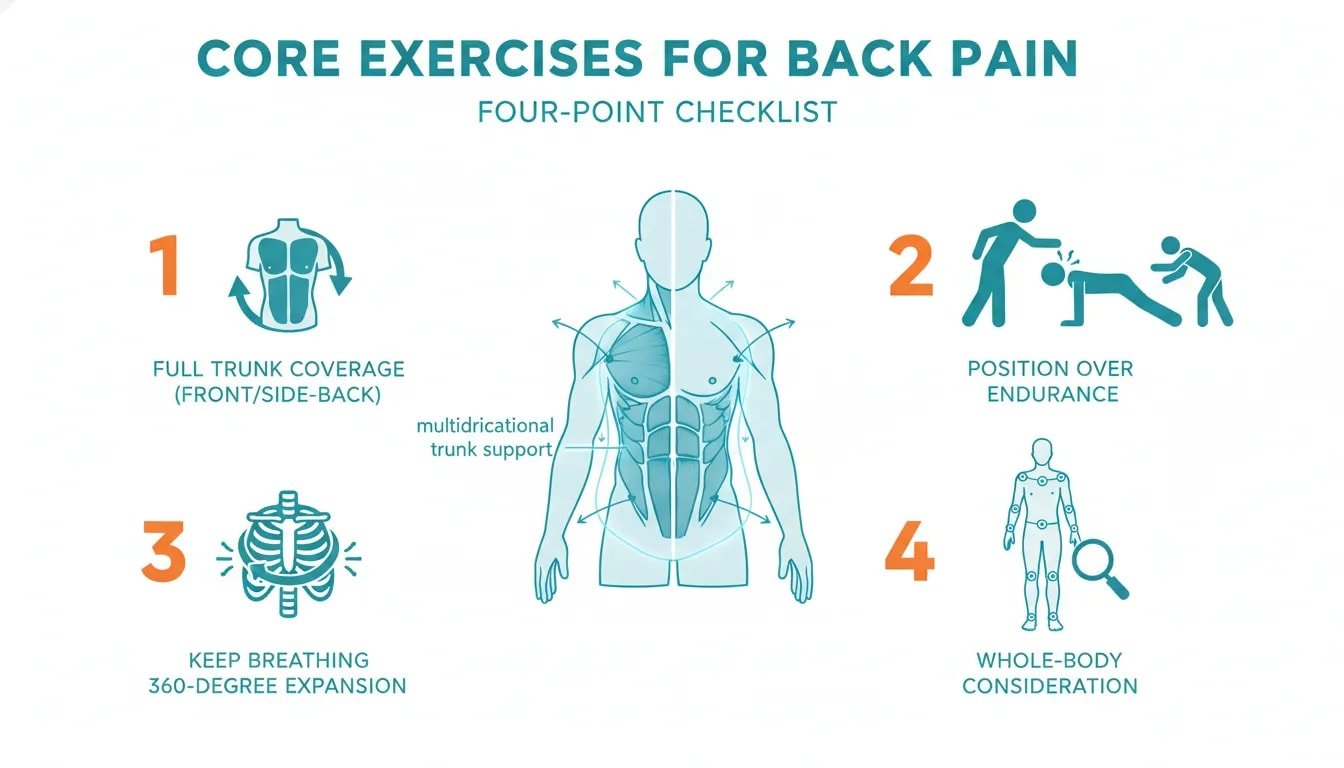
Use this four-point checklist
- Train the full trunk. Include the front, sides, and back of the torso instead of treating the front abdominal muscles as the entire core.
- Prioritize position over endurance. Stop or regress an exercise when you can no longer maintain a supported spinal position.
- Keep breathing. Use controlled 360-degree breathing rather than holding your breath or bracing as hard as possible.
- Consider the whole body. If pain persists, assess whether another joint or movement pattern is changing how load reaches the back.
These principles can be applied to many forms of training. Whether you are doing a plank, a floor-based exercise, or a standing movement, the same questions remain: Is the spine supported? Are you breathing? Is the entire trunk contributing? Are you compensating elsewhere?
Common mistakes to avoid
- Only training six-pack muscles: The core is a full system around the spine, not just the front of the abdomen.
- Measuring success by hold time: Longer is not automatically better if technique and breathing deteriorate.
- Holding the breath: Breath holding can interfere with the pressure management needed for controlled support.
- Using maximum tension for every repetition: Effective support should be controlled, not necessarily rigid or forced.
- Assuming the back is always the source: Persistent symptoms may be influenced by movement deviations elsewhere in the body.
- Repeating painful movement without reassessment: If an exercise consistently aggravates symptoms, it needs to be reconsidered rather than pushed through.
The Key Takeaway
The best core exercises for back pain are not defined by how hard they make your stomach work or how long you can hold a plank. They teach the muscles around the spine to work as a coordinated 360-degree support system while you maintain position and breathe effectively.
If your current routine is not helping, shift the focus from abdominal endurance to whole trunk control, pressure management, and movement quality. When pain keeps returning despite consistent effort, look beyond the back itself and consider a more integrated assessment of how your body distributes load during daily movement.
Frequently Asked Questions About Core Exercises for Back Pain
Can core exercises help with back pain?
Core exercises can be helpful when they improve coordinated support around the spine. The key is to train the front, sides, and back of the trunk while maintaining a controlled spinal position and breathing effectively.
Why do planks sometimes make back pain worse?
A plank may be unhelpful when the spine loses its supported position, breathing stops, or excessive tension is used to hold the posture. A shorter and better-controlled variation may be more appropriate than a long hold performed with compensation.
Are crunches enough for core strength and back pain relief?
No. Crunches primarily emphasize the front abdominal area, while the core includes muscles around the front, sides, and back of the spine, extending from the neck to the hips. A complete approach should address the entire support system.
What is 360-degree breathing?
360-degree breathing is a way of breathing that encourages expansion around the trunk rather than only through the upper chest or front of the abdomen. It can help with pressure management and spinal support during core exercises.
What if core exercises for back pain are not working?
The source of the problem may not be the core alone. A movement issue or joint deviation elsewhere can affect your center of gravity and create uneven loading during activities such as sitting and walking. An integrated movement assessment can help identify contributing patterns.