

A recurring running injury is rarely just bad luck. If the same pain keeps returning after rest, treatment, or a short rehab phase, the deeper issue is often still there. For many runners, the real problem is not only training load. It is the combination of poor movement quality, restricted joint function, lack of running-specific strength, and returning to running without fixing how the body moves.
This matters especially for recreational runners. Many people start with simple advice: buy shoes, put on running clothes, and begin. That sounds easy, but running places high forces through the body. If the joints, muscles, and movement patterns are not ready for those demands, the body finds workarounds. Those workarounds may get you through a few runs, but they often lead to repeated pain in the knee, hip, ankle, shin, or lower back.
If you have been stuck in a cycle of injury, rehab, return, and reinjury, the way out is usually not more random stretches or more generic gym work. It is a more complete approach that looks at movement restrictions, technique, strength, and training progression together.
Table of Contents
- What a recurring running injury usually means
- Why “just start running” often backfires
- Why a recurring running injury keeps returning
- Signs your injury is more about movement quality than just overtraining
- The missing foundation: function before form
- How to break the recurring running injury cycle
- Common mistakes that keep runners stuck
- What individualized running rehab and prevention should include
- A practical self-check for runners with repeat injuries
- When to get outside help
- Additional resources
- Key takeaway
- Why does my running injury keep coming back?
- Can poor running form cause a recurring running injury?
- Is generic strength training enough to prevent repeat running injuries?
- Should I fix mobility before working on running technique?
- How do I return to running without getting injured again?
What a recurring running injury usually means
When an injury returns, it often means one of two things:
- The painful tissue settled down, but the root cause did not.
- The return to running happened before the body could handle the same demand differently.
Many runners do get temporary relief. Pain decreases, inflammation settles, and daily activities feel normal again. Then they return to their usual running pattern, with the same mechanics and the same physical limitations, and the pain returns.
That is why a recurring running injury should not be seen only as a local tissue issue. It is often a movement problem plus a load problem.

Why “just start running” often backfires
Running looks simple, but it is not a basic activity from a body-mechanics perspective. It requires your joints to move well, your body to absorb force well, and your movement pattern to stay efficient while repeatedly landing and pushing off.
Without that foundation, each run reinforces compensation.
Common beginner assumptions that create problems include:
- Thinking shoes alone will solve poor mechanics
- Assuming being active in general means the body is prepared for running
- Following advice from experienced runners who may not understand biomechanics
- Jumping into 5K or 10K goals before building movement capacity
Running is repetitive. If your movement is inefficient, the same stress is repeated again and again. Over time, that is exactly how a recurring running injury develops.
Why a recurring running injury keep returning
There is usually more than one factor involved. The most common reasons include the following.
1. Movement dysfunctions were never addressed
The body adapts to years of daily habits. For many people, long hours of sitting reduce how well certain joints move and how well certain muscles contribute. If hip motion is limited, for example, the body may compensate elsewhere during running. Even if pain treatment works, those compensations remain unless they are specifically addressed.
2. Joint restrictions change running form
You cannot force efficient running mechanics onto a body that does not have the range or control to produce them. If a joint is restricted, technique drills often become a performance of the drill rather than true improvement. The body will simply cheat around the limitation.
A runner with limited hip extension is a good example. If the hip does not move freely, proper push-off mechanics become difficult. That can change how the pelvis, lower back, knee, or foot behaves during running.
3. Strength work is too generic
Many runners do some strength training but still struggle with repeated injuries. Often, the problem is not the idea of strength training. It is that the work is too generic and not matched to the runner’s body, restrictions, and movement demands.
Sports-specific strength is not just about doing popular exercises. It should support the way your body needs to move for running. If you want a better understanding of how tailored work differs from general gym routines, this overview of sports-specific strength training is a useful starting point.
4. Running technique is ignored or introduced too early
Technique matters, but not in isolation. Trying to improve form before addressing restrictions can become frustrating and ineffective. The body first needs enough mobility, control, and baseline strength to express better mechanics.
Once that foundation is in place, focused running technique improvement can help reduce overload patterns and make movement more efficient.
5. Daily life works against training
A person may run for an hour a day but spend most of the remaining day sitting. That mismatch matters. If the body spends long stretches in inactive positions and only a short period handling dynamic movement, it is harder to maintain the joint function and movement quality that running demands.
This does not mean desk workers cannot run well. It means they often need more deliberate work to restore movement capacity.
6. Volume and intensity increase too fast
Even when pain is gone, the body still needs a gradual return to impact and repetition. A recurring running injury often reappears when runners build mileage or intensity before their movement quality and strength can support it.

Signs your injury is more about movement quality than just overtraining
Load matters, but the body’s ability to handle that load matters just as much. You may need a deeper movement assessment if any of these sound familiar:
- The same pain returns whenever mileage goes up
- You feel “tight” in the same areas no matter how much you stretch
- Your running form breaks down quickly when tired
- You have had treatment that reduced pain, but it never solved the pattern
- One side of the body always feels less stable or less mobile
- Strength training has not changed the problem despite consistent effort
Those are clues that the issue may be more than just doing too much, too soon.
The missing foundation: function before form
One of the biggest mistakes runners make is trying to improve technique before restoring the body’s ability to move well. A better running form is built on better joint function, not the other way around.
A useful sequence looks like this:
- Address restrictions and dysfunctional movement patterns.
- Build baseline strength that suits the individual runner.
- Practice running technique along with the running-specific strength work, tailored to your body.
- Gradually build running volume.
- Increase intensity only after volume is well tolerated.
This order matters. Skipping the first two steps is a common reason a recurring running injury never fully goes away.
How to break the recurring running injury cycle
Step 1: Stop treating pain relief as the finish line
Reduced pain is progress, but it is not the same as being ready for normal training. If you return as soon as pain fades, without changing the movement pattern that caused overload, you are likely to repeat the cycle.
Step 2: Identify movement restrictions
Look for joints that are not moving through a healthy, natural range, especially where running demands repeated motion and control. Restrictions can interfere with efficient technique and shift stress into other tissues.
If recurring pain extends beyond running and affects the back, hip, knee, shoulder, or ankle, targeted help through a pain-free movement program may be relevant.
Step 3: Build runner-specific strength
Strength work should support force absorption, joint control, and efficient movement patterns for your body. That means not every runner needs the same exercise list, the same loading strategy, or the same progression.
Generic plans can help some people, but they often miss the details that keep a recurring running injury alive.
Step 4: Improve running mechanics only when the body is ready
Running technique becomes more effective after movement restrictions are reduced. At that stage, drills and form work can help reinforce better patterns instead of fighting against structural limitations.
Step 5: Progress gradually
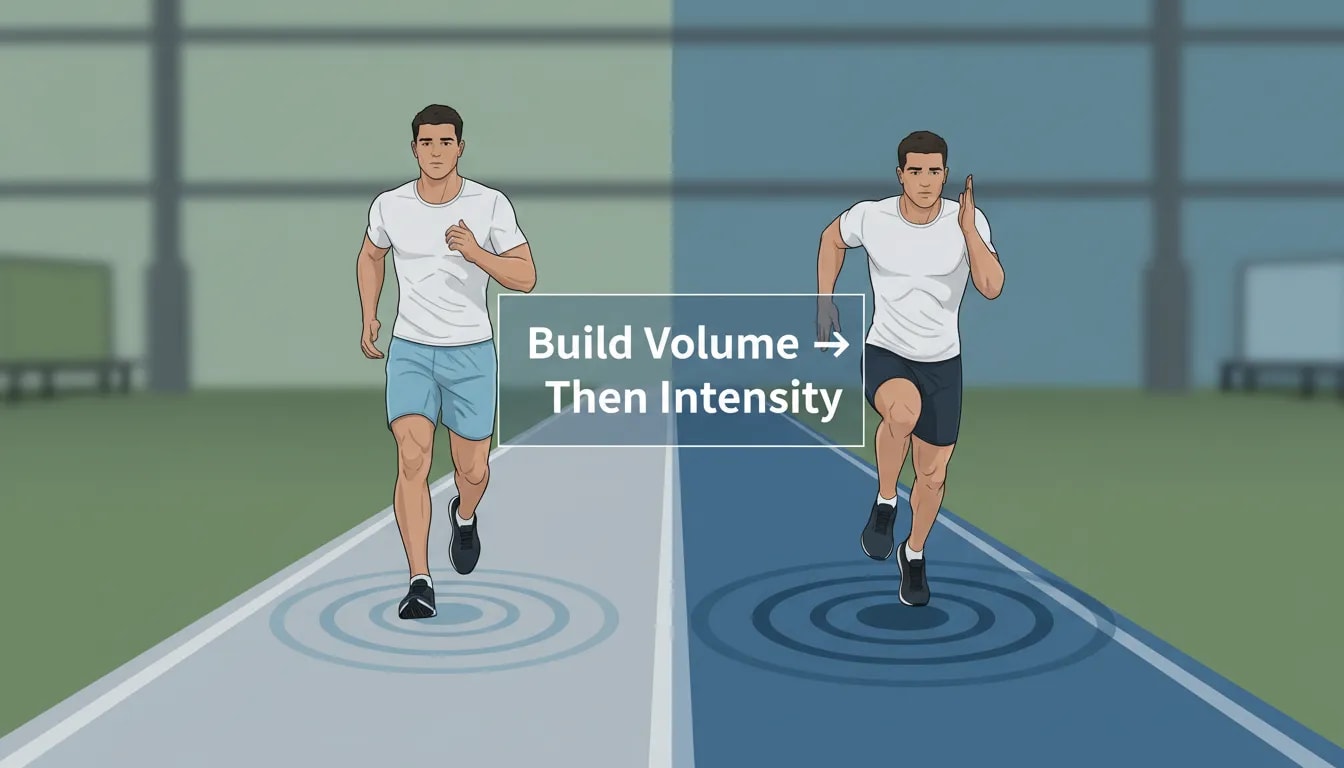
Build volume first, then intensity. This is a practical way to lower reinjury risk. The body needs time to adapt not only to running distance, but also to the repeated load of impact.
Using effort rather than pace alone can also help runners avoid pushing too hard too early. An effort-based approach like Run By Feel can support smarter progression.
Common mistakes that keep runners stuck
- Copying generic plans from the internet
What works for one runner may not suit another runner’s movement restrictions or strength profile. - Relying only on massage, rest, or passive treatment
These can help with symptoms, but they do not automatically change movement patterns. - Confusing experience with expertise
Someone may have run for years and still not understand the mechanics behind repeated injury. - Trying to fix the form by force
If the body lacks the capacity for the desired motion, form cues alone rarely solve the issue. - Returning to previous mileage too quickly
The tissue may feel better before the whole system is ready. - Ignoring the impact of a sedentary routine
One hour of training does not fully offset many hours of poor movement throughout the day.
What individualized running rehab and prevention should include
Not every runner needs the same program, but a useful plan for a recurring running injury should usually include these elements:
- Movement assessment to identify restrictions and compensations
- Corrective exercise aimed at restoring useful movement
- Running-specific strength matched to the runner’s body’s current ability and demands
- Technique work introduced at the right time
- Gradual running progression based on tolerance, not impatience
- Ongoing review to catch small issues before they become repeat injuries
If you want structured support for putting these pieces together, a personalized running coaching program can be useful when recurring pain is connected to both training decisions and movement quality.
A practical self-check for runners with repeat injuries
Use this checklist to decide whether your current approach is too narrow:
- Have you only treated the painful area, not the movement pattern behind it?
- Have you had your joint function or movement restrictions assessed?
- Is your strength training designed for your body and your running demands?
- Are you trying to change technique without enough mobility or control?
- Did your return-to-run plan progress too quickly?
- Does your daily routine leave you stiff and inactive for most of the day?
If you answered yes to several of these, there is a good chance your recurring running injury is being fed by factors that standard rest-and-return approaches miss.

When to get outside help
Repeated injury patterns are a strong reason to get expert guidance, especially if:
- You have had the same issue more than once
- Pain returns as soon as training becomes consistent
- You have tried generic rehab and generic strength programs without success
- You suspect your running mechanics are part of the problem
- You are unsure how to rebuild training safely
In those cases, the most helpful support usually comes from someone who understands movement dysfunction, running mechanics, and the progression back to full training. If you need direct guidance, you can book a call or send a message here.
Additional resources
For a broader context on injury prevention and training load in runners, the American College of Sports Medicine offers evidence-based exercise guidance, and the NIAMS sports injury resource provides general information on overuse and recovery.
Key takeaway
A recurring running injury usually persists because the body returns to the same stress with the same limitations. Rest may calm symptoms, but long-term change requires more. You need enough joint function, the right movement patterns, strength that matches your body, and a gradual build in training.
The goal is not just to be pain-free for a week. The goal is to run with a body that can handle running well.
Why does my running injury keep coming back?
A recurring running injury often comes back because only the symptoms were treated. If movement restrictions, poor mechanics, inadequate running-specific strength, or aggressive training progression are still present, the same overload pattern returns when you start running again.
Can poor running form cause a recurring running injury?
Yes. Poor running form can contribute, but it is often linked to deeper issues such as restricted joints or weak movement control. Form cues alone may not help unless the body first has the mobility and strength to move better.
Is generic strength training enough to prevent repeat running injuries?
Not always. Generic strength training can be useful, but it may not address the specific movement demands and weaknesses behind a recurring running injury. Many runners need strength work tailored to their body, their limitations, and their running patterns.
Should I fix mobility before working on running technique?
In many cases, yes. If a joint is restricted, trying to improve technique first is often ineffective. Restoring enough mobility and movement control makes technique work more productive and reduces compensation.
How do I return to running without getting injured again?
Return gradually. Address movement restrictions, build running-specific strength, reintroduce technique work when appropriate, and increase running volume before intensity. A slow, structured progression is usually safer than trying to jump back to your old mileage.